What the adoption trend means for home charging timelines
As EV ownership grows in the Twin Cities, demand for residential charging installation has grown alongside it. Installer availability, permit office processing times, and utility rebate program funding are all affected by adoption volume. A homeowner who schedules an installation several weeks in advance typically gets better scheduling options than one who calls the week the car arrives.
- Lead times for permitted residential installations in the metro have lengthened as demand increases.
- Permit offices in high-growth suburbs like Eden Prairie, Plymouth, and Maple Grove have seen increased EV-related permit volume.
- Utility rebate programs with annual funding caps may be exhausted later in the year — applying early in the program year is generally better.
Why the Twin Cities is outpacing the national EV average
Several factors drive higher EV adoption in the Twin Cities compared with national averages. The metro has a high concentration of technology and healthcare sector employers whose workforces skew toward early EV adoption. State and federal incentives have aligned during a period of major model launches. Xcel Energy's active EV customer programs have reduced the total cost of ownership for many households. The region also has strong single-family home ownership rates, which simplifies the home charging equation compared with high-density markets.
- High household income and professional employment concentrations drive EV purchase rates above national averages.
- State clean energy goals have aligned with federal incentives during high-volume EV delivery periods.
- Single-family housing dominance in suburbs like Eden Prairie, Minnetonka, and Plymouth makes home charging straightforward for most buyers.
What high adoption means for the charging infrastructure experience
More EVs on the road means more chargers in more garages, which normalizes the installation process. Installers have refined their processes, permit offices have standardized their requirements, and utility programs have clearer documentation paths. The tradeoff is capacity. When many owners are scheduling at the same time, availability compresses.
- Experienced local installers have processed enough Twin Cities permits to know the common requirements and exceptions in each jurisdiction.
- Popular charger models are more readily available in local supply channels due to higher regional demand.
- Scheduling three to four weeks before expected vehicle delivery is a reliable buffer in the current market.
The neighborhoods where EV density is highest
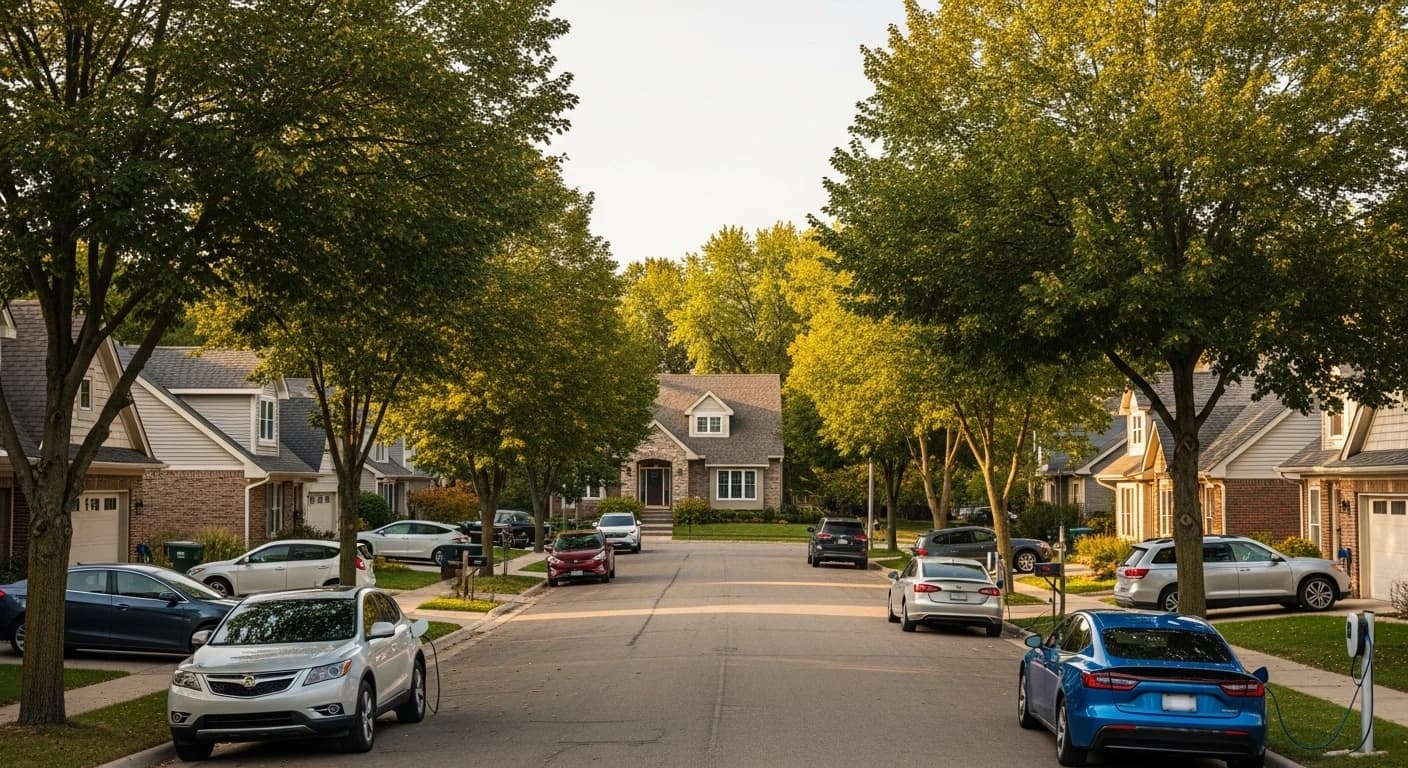
EV adoption in the Twin Cities is not evenly distributed. Edina, Eden Prairie, Minnetonka, Plymouth, and Maple Grove have among the highest EV ownership rates in the metro based on vehicle registration patterns. New construction suburbs served by Connexus and Dakota Electric are growing rapidly with favorable panel conditions.
- Edina has one of the highest EV ownership rates in Minnesota — demand for charger installations and upgrades is active there.
- New construction suburbs like Maple Grove and Plymouth have favorable panel conditions that make installations less complex.
- Urban neighborhoods in Minneapolis near major employment corridors show growing interest in multifamily and condo charging solutions.
How to avoid the late-scheduling frustration
The most common complaint from Twin Cities EV owners is not about the installation itself. It is about the timing. The car arrives and the garage is not ready. Level 1 charging becomes the default for several weeks while the permit and installation are arranged. That gap is easily avoided.
- Contact an installer as soon as a vehicle delivery timeline is known — not after delivery day.
- Request a site assessment early to identify panel, conduit, and layout requirements before they become urgent.
- Confirm the permit process for the specific city — some jurisdictions in the metro are faster than others.
Next step
Ready to plan your install?
Validate panel capacity, circuit path, and mounting location before installation day. Get a clear scope in writing.